
Best Evidence for an Accident Case
The first hours after a crash can shape everything that happens next. Pain, shock, and confusion make it hard to think clearly, but the best evidence for accident case claims is often gathered long before an insurance company decides what your injury is worth. If key proof disappears, gets overwritten, or never gets collected, the truth can get buried under delay, blame, and lowball offers.
That is why evidence matters so much. It is not just paperwork. It is the difference between your word and proof that speaks for itself. When you are hurt because someone else acted carelessly, strong evidence helps show what happened, who caused it, how badly you were injured, and what those injuries have cost you.
What counts as the best evidence for an accident case?
There is no single piece of proof that wins every claim. The best evidence for an accident case depends on the type of crash, the injuries involved, and whether fault is being disputed. A rear-end collision with clear vehicle damage may need a different kind of proof than a multi-car crash at an intersection where everyone points fingers.
Still, some forms of evidence carry more weight than others because they are harder to argue with. Photos taken right after the wreck, video footage, official reports, medical records, and statements from neutral witnesses often become the backbone of a strong case. They create a timeline and give context to your injuries before the insurance company has a chance to rewrite the story.
Photos and video can preserve the truth
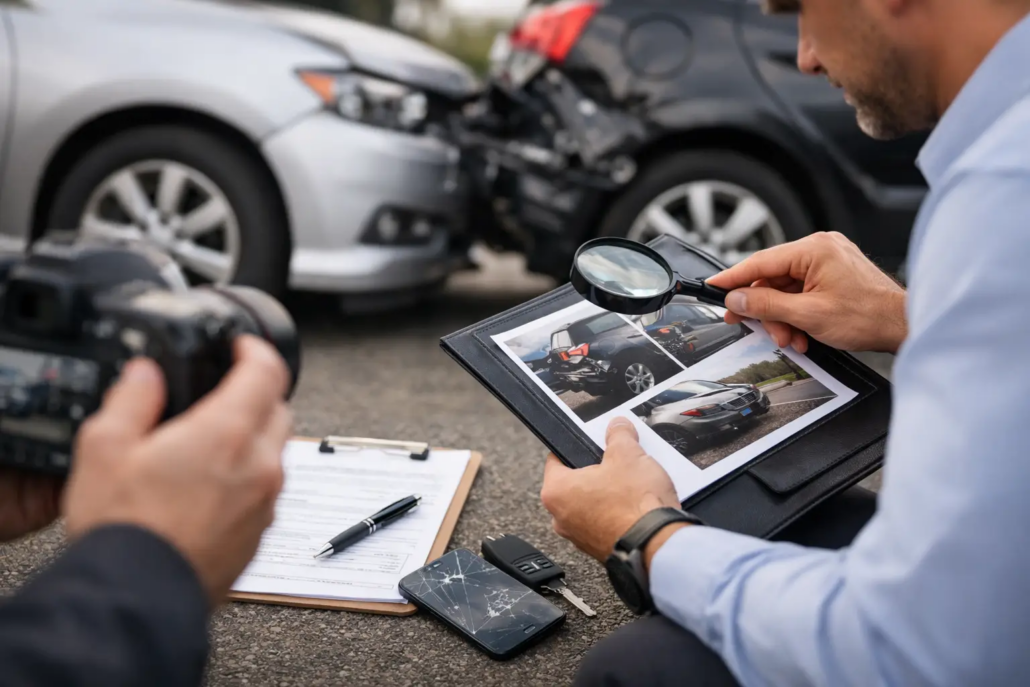
Scene evidence disappears fast. Cars get towed. Skid marks fade. Debris gets cleared. Bruises change color. That is why photos and video are often some of the most powerful proof available.
If you are physically able, photos should capture the vehicles from multiple angles, the surrounding road, traffic signs, lane markings, weather conditions, broken glass, deployed airbags, and any visible injuries. Close-ups matter, but wide shots matter too. A dent on a bumper tells part of the story. A full-scene image showing vehicle position in the intersection tells much more.
Video can be even stronger because it captures movement, sound, and timing. Dashcam footage, security camera recordings, and nearby business surveillance can reveal speed, impact, and driver behavior in ways memory cannot. The catch is that this evidence may be deleted quickly. Some systems overwrite recordings within days.
Medical records connect the accident to your injuries
Insurance companies often admit a crash happened but dispute the harm it caused. That is where medical evidence becomes essential. Emergency room records, ambulance reports, diagnostic imaging, treatment notes, prescriptions, physical therapy records, and specialist evaluations can connect your symptoms directly to the accident.
Consistency matters here. If you tell the paramedics your neck and back hurt, report the same symptoms to your doctor, and continue treatment based on medical advice, that record helps show the injuries were real and immediate. If there are long gaps in care, insurers may argue you were not seriously hurt or that something else caused the problem.
This does not mean every injury appears instantly. Some injuries, especially soft tissue damage, concussions, or internal trauma, can worsen over hours or days. What matters is getting evaluated as soon as possible and being honest about every symptom, even the ones that seem minor at first.
The police report helps, but it is not the whole case
A police report can be important because it documents the basic facts soon after the crash. It may include the drivers involved, witness names, insurance information, road conditions, visible damage, and whether citations were issued. That early snapshot can support your version of events.
But a police report is not perfect. Officers do not always witness the collision themselves. They may rely on quick statements from stressed drivers and incomplete scene conditions. Sometimes reports contain mistakes, and sometimes they leave out details that later become critical.
So yes, get the report and preserve it. Just do not assume it is enough on its own. A serious injury claim usually needs stronger supporting evidence around it.
Witness statements can break a deadlock
When drivers disagree, neutral witnesses can be incredibly valuable. A person with no connection to either side may be the one voice the insurer cannot easily dismiss. Witnesses can describe who had the light, whether someone was speeding, whether a driver was looking down at a phone, or what happened seconds before impact.
The challenge is timing. Witnesses leave. Names get lost. Memories fade. If possible, collect names and contact information at the scene. Even a short note in your phone can make a major difference later. Your lawyer can follow up for formal statements before details blur.
Passengers can also help, but insurers may try to paint them as biased. That does not make their testimony useless. It just means independent witnesses may carry more weight when fault is heavily contested.
Your phone and online activity can help or hurt
Many people do not realize how much evidence lives on a phone. The time a photo was taken, a text sent after the crash, call logs, location data, and notes about symptoms can all help establish what happened. A simple journal on your phone that tracks pain levels, missed work, sleep issues, and treatment progress can support the human side of your damages.
At the same time, social media can become a weapon against you. A smiling photo at a family event does not mean you are pain-free, but an insurer may still use it that way. Posts, comments, check-ins, and videos can be taken out of context and used to minimize your injuries.
After an accident, privacy matters. So does restraint. Evidence should tell the truth, not give the other side material to twist.
Property damage and repair records matter more than people think
Vehicle damage is not just about getting your car fixed. It can support how the impact happened and how severe it was. Photos of crushed panels, broken seats, shattered glass, and airbag deployment help create a physical record of force.
Repair estimates, total loss evaluations, and black box data from the vehicle may also be useful. In some cases, insurers argue that minimal visible damage means minimal injury. That is not always true, especially with neck, back, and head injuries. But property damage still plays an important role in the larger picture.
Evidence of losses proves what the accident cost you
A legal claim is not only about fault. It is also about damages. That means proving what this crash has taken from you physically, financially, and emotionally.
Medical bills are one part of that. Lost wages, reduced earning ability, out-of-pocket expenses, and records showing missed appointments or job duties matter too. If your injuries changed your daily life, evidence of that change can be powerful. Maybe you cannot lift your child, return to work, drive without panic, or sleep through the night. Those losses are real, and they deserve to be documented.
This is where many injured people get overwhelmed. They focus on healing while paperwork piles up. That is exactly why early legal help can make a difference. A strong attorney does not just react to evidence. They move fast to preserve it, request it, organize it, and use it to build pressure where it belongs.
For people trying to understand their legal options after a crash, this resource may also help: https://accident.usattorneys.com/florida/
What to do now if you think evidence is slipping away
If you have already left the scene, do not panic. You may still be able to protect your case. Save every photo, bill, prescription, email, and message related to the accident. Get medical care and follow through with treatment. Request the police report. Write down what you remember while it is fresh, including the time, location, traffic conditions, and anything the other driver said.
Most importantly, do not wait too long to get help. Surveillance footage can disappear. Witnesses become hard to find. Insurance companies start building their defense immediately. You deserve someone building your case with the same urgency.
At Madalon Injury Law, that fight is personal. You are not just trying to prove a claim. You are trying to protect your future, your health, and your dignity after someone else turned your life upside down.
The strongest cases are rarely built on one dramatic piece of proof. They are built on fast action, honest records, and evidence that leaves less room for excuses.