
Can Miami Delivery Riders Claim Workers’ Comp and Sue?
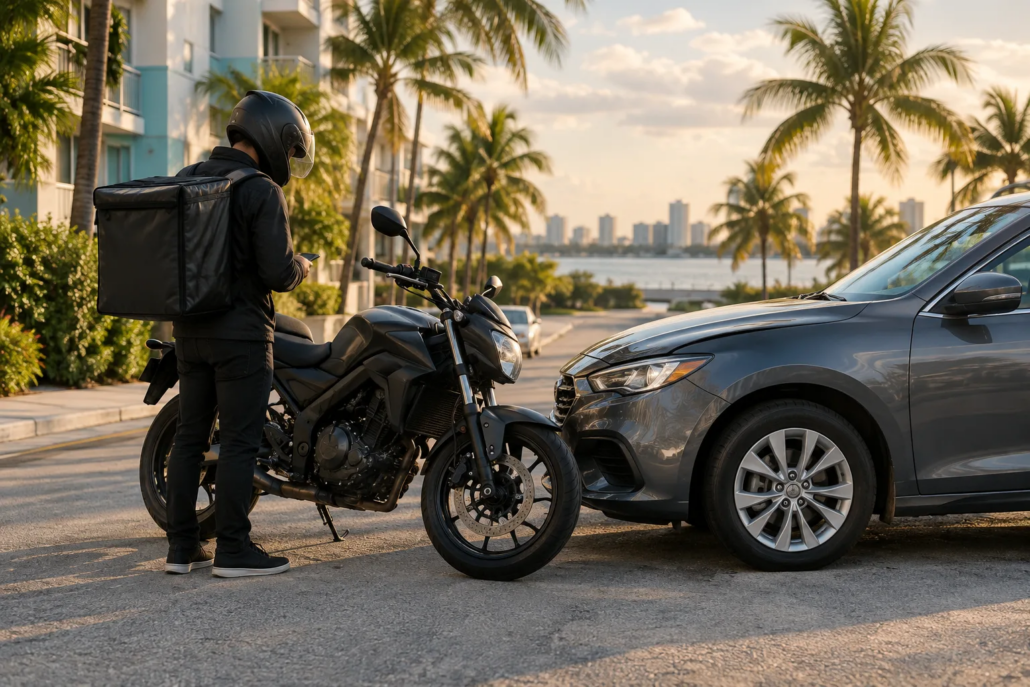
A delivery rider’s motorcycle crash can bring two different questions into focus: whether the injury is connected to work, and whether another person or business may be responsible for causing the collision. For a Miami motorcycle delivery accident, workers’ compensation may be one possible route, while a separate third-party claim may be available if someone outside the work relationship contributed to the crash. Neither route applies automatically. A rider’s employment classification, the circumstances of the delivery, the available insurance, and the evidence all matter.
Joseph Madalon helps injured people understand the issues that may arise after a motorcycle crash. This article explains what a delivery rider can preserve about an assignment, work status, collision, injuries, and another driver, and why benefit eligibility requires an individual review. It also outlines how the two potential claims differ in Florida, including why a workers’ compensation case does not necessarily answer whether another party may be liable.
Miami motorcycle delivery accident workers’ compensation: who may qualify?
Workers’ compensation generally concerns an injury connected to a person’s work. In Florida, whether a delivery rider can seek benefits may depend on whether the rider is legally considered an employee, whether the injury arose in the course of work, and other facts about the relationship and incident. A label in an app or contract can be relevant, but it may not resolve every legal question by itself.
Why work status and the delivery assignment matter
Delivery platforms and businesses may use different arrangements, and a rider’s actual circumstances can matter alongside written terms. Relevant details may include who assigned the delivery, whether the rider had accepted it, what route or task was underway, and whether the crash happened while the rider was carrying out that work. A crash during a personal detour may raise different questions from one during an active delivery.
Preserve records that show the work connection, if available:
- Screenshots or saved records showing the offer, acceptance, pickup, delivery, and cancellation status.
- Dispatch messages, platform communications, route details, and the time of the crash.
- Contracts, onboarding materials, payment statements, and records identifying who controlled or arranged the work.
These materials can help an attorney or claims administrator assess the circumstances, but they do not establish eligibility on their own. A rider in Miami, FL, may have questions for the Florida Division of Workers’ Compensation or an insurer, depending on how the claim is handled. The appropriate process depends on the specific work arrangement and facts.
How can a delivery rider pursue workers’ compensation and a third-party claim?
A workers’ compensation matter and a third-party injury claim are separate legal routes. Workers’ compensation may provide benefits for a qualifying work-related injury without requiring proof that another driver was at fault. A third-party claim, by contrast, generally requires evidence that another person or entity was legally responsible for the collision and that the crash caused compensable harm.
A potential third party could be another driver or, in some situations, a business or other entity connected to the crash. These possibilities should be investigated rather than assumed. The other driver’s actions, insurance, and work status may be relevant. If that driver was working at the time, questions about the employer’s role and insurance may also arise; see this discussion of employer liability when a work vehicle hits a motorcycle.
For a crash in Miami-Dade County, riders may be able to request or preserve available crash documentation through the appropriate law-enforcement or state channels. Useful evidence may include:
- The other driver’s name, contact information, vehicle details, and insurance information.
- Photos or video of the vehicles, roadway, damage, traffic controls, and visible conditions, if safely obtainable.
- Witness names and contact information, plus any available crash report or incident number.
- Records showing medical visits, symptoms reported to providers, and work time missed.
Do not assume motorcycle benefits match automobile no-fault coverage. Review Florida PIP coverage rules for motorcycle crashes to understand why a rider may need to identify other potentially available coverage. If the other driver has no insurance or limited coverage, Miami motorcycle uninsured motorist coverage options may be worth reviewing separately.
What records can protect the rider’s account of the crash and losses?
Evidence can help clarify what the rider was doing, how the collision happened, what injuries were reported, and what income was affected. A useful record is not proof of liability by itself, but consistent documentation can give a claims review a clearer factual foundation. Keep original files when possible and note when and how each item was received.
Preserve work, crash, injury, and income information
In addition to assignment records and collision evidence, keep receipts and communications related to the incident. Examples may include towing or repair records, insurance correspondence, witness contact details, and photographs. Medical records should reflect the rider’s own reports and providers’ assessments; this article does not offer medical guidance or diagnose an injury.
Income proof can be less straightforward for a gig worker than for an employee who receives regular wage statements. Save platform earnings histories, payment records, invoices, tax documents, and any available work schedule or contract information. This overview of records that help self-employed riders document lost income discusses documentation that may help explain earnings, while the way losses are evaluated depends on the claim and the rider’s circumstances.
Avoid deleting app messages or editing original photographs. If details are uncertain, distinguish what the rider personally remembers from what a record or witness reports. A lawyer can also review how workers’ compensation benefits and a third-party claim may interact, including whether reimbursement or lien issues could apply. In Miami, FL, as elsewhere in Florida, deadlines and procedures may depend on the type of claim, so an individual review can help identify what rules may apply.
Frequently Asked Questions
Can a rider classified as an independent contractor receive workers’ compensation?
Possibly, but the label alone may not settle the question. Florida workers’ compensation eligibility depends on the legal relationship and the circumstances of the work and injury. The contract, delivery arrangement, degree of control, and other facts may be relevant. A rider should preserve available work records and have the specific arrangement reviewed by a qualified Florida attorney or appropriate claims professional.
Can a rider bring a claim against the driver who caused the crash while seeking workers’ compensation?
In some cases, the two routes can exist at the same time because they address different issues. Workers’ compensation concerns qualifying work-related benefits; a third-party claim concerns another party’s legal responsibility for the collision. The facts, insurance, and applicable rules matter. Benefit payments may also affect how a later recovery is handled, so the claims should be evaluated together rather than treated as unrelated.
What if the delivery rider was between orders when the crash happened?
A gap between orders may raise questions about whether the rider was still performing work, waiting for an assignment, or engaged in a personal activity. The answer can depend on the platform’s arrangement and the rider’s actual conduct, not just the time shown on a phone. Records of the app status, messages, route, and purpose of the trip may help clarify the timeline.
What if the other driver leaves before the rider gets their information?
The rider may still be able to preserve useful evidence, such as the time and location, vehicle description, witness contacts, photographs, and any available report or incident number. Reporting and investigation procedures can depend on the circumstances. An attorney can help assess what insurance or claim options may apply, including whether any uninsured or underinsured motorist coverage is relevant.
How Joseph Madalon Can Help
Joseph Madalon is dedicated to helping injured riders understand the distinct questions that can follow a delivery crash: work status, potential workers’ compensation benefits, third-party responsibility, and insurance. A careful review may consider the delivery records, crash evidence, injury documentation, and the rider’s income information without assuming that one record determines the entire claim. The firm is committed to fighting for clients’ rights and is ready to evaluate how the available facts may affect their options.
If you were injured while making a delivery in Miami, contact Joseph Madalon to discuss your situation and request a free consultation or case evaluation.
The information in this article is for educational purposes only and does not constitute legal advice. Contact a qualified attorney licensed in Florida for advice specific to your situation.







Leave a Reply
Want to join the discussion?Feel free to contribute!