
Which Evidence Helps Preserve a Wrecked Bike in Miami?
A motorcycle can look very different after it has been moved, taken apart, cleaned, or repaired. If you need to preserve a motorcycle after an accident in Miami, documenting its condition before those changes may help retain details about how the crash happened or whether a component failed. The practical challenge is balancing evidence preservation with safety, storage, insurance requirements, and the need to make the bike usable again.
Joseph Madalon helps people understand the questions that can arise after a motorcycle collision, including why the bike’s condition may matter. This guide outlines what riders can photograph, which physical items and records may be worth retaining, and how to think about inspection and repair timing. These are general considerations, not instructions for a particular claim; circumstances and applicable Florida rules can differ.
How to Preserve a Motorcycle After an Accident in Miami: Start With Its Condition
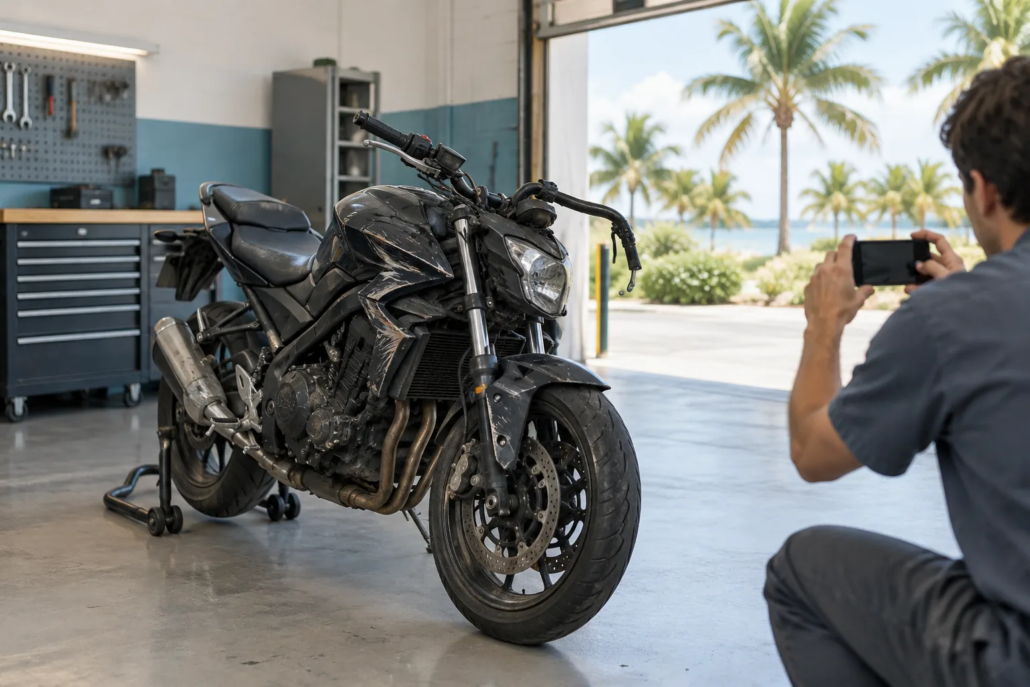
Before repair work changes the motorcycle, make a visual record if it is safe and practical to do so. Photograph the bike as a whole and capture close views of damaged areas from several angles. Include both sides, the front and rear, visible impact marks, broken or bent components, debris still attached, and any fluid or scrape marks. Take wider views that show where the motorcycle was positioned, if the scene is still accessible and safe.
Use the original image files when possible and keep a separate backup. Avoid filters or edits that alter the appearance. If you make notes, record when and where the images were taken and identify what each image shows. A ruler or familiar object can provide scale for a close-up, but do not place anything in a way that disturbs a damaged part or creates a hazard.
Photograph suspected component problems in place
If a tire, brake, steering part, or another component appears damaged or may have failed, photograph it before anyone removes, cleans, or discards it, when feasible. Do not assume that visible damage proves why the crash occurred; an inspection may be needed to assess competing explanations. Preserving evidence of a possible motorcycle part failure can be especially relevant if a defect is being considered.
The motorcycle’s position and the scene may also help tell the story. Clear photographs of damage and surrounding conditions can become part of the evidence used to reconstruct a difficult motorcycle crash. Avoid re-entering traffic or an unsafe area to take pictures.
Keep the Paper Trail and Coordinate an Inspection
Physical evidence is only part of the record. Keep documents and communications that show what happened to the motorcycle after the collision, who handled it, and what work was proposed or completed. Useful records may include:
- Towing and storage receipts, including dates and the business that handled the bike.
- Repair estimates, inspection notes, invoices, and photographs taken by a repair facility.
- Maintenance records and receipts for upgrades or aftermarket parts.
- Insurance communications about inspection, repair authorization, or a possible total-loss evaluation.
- The crash report and any photographs or notes that help compare its account with other available evidence.
In Miami, the responding agency may depend on where the crash occurred and who handled the scene. Keep the report and review whether its description appears consistent with the damage, photographs, and known facts. If there are material omissions or errors, learning about reviewing and correcting a Miami motorcycle crash report may help you understand what information is relevant to that process.
If an inspection may be useful, communication matters. When feasible, coordinate access before repairs begin so the relevant people can discuss what should be inspected and how removed parts will be handled. Requirements and insurance processes vary, so avoid assuming that one inspection arrangement applies to every Florida claim. Keep copies of requests and responses, and note any deadlines or instructions you receive.
Before Repairs or Disposal: Avoid Losing Useful Details
A damaged motorcycle may need prompt attention because of storage costs, safety concerns, or an insurer’s process. At the same time, repair or disposal can make some physical details harder to evaluate. When circumstances allow, a rider can ask the repair facility or insurer what inspection opportunities exist, what parts may be removed, and whether removed components can be retained. A qualified attorney may help assess those questions in light of the specific situation.
Before authorizing work, consider whether you have preserved:
- Overall and close-up photographs of the motorcycle and its damage.
- Images of any suspected failed component before removal, if safe and practical.
- The names of towing, storage, and repair providers, along with dates and receipts.
- Maintenance history, prior-condition photographs, and receipts for upgrades.
- Written estimates, inspection findings, and communications about repair or disposal.
Do not clean, alter, or throw away a potentially relevant part simply to make the bike easier to store. If a component is removed, ask whether it can be identified, kept intact, and documented; how that should be handled can depend on the inspection and claim circumstances. Keep records showing the motorcycle’s condition before the crash too. Maintenance history, upgrade receipts, and prior photographs may help establish a baseline, including records that support a motorcycle’s condition and value if the bike’s value is later disputed.
For riders in Miami, the practical goal is not to delay necessary safety or repair decisions indefinitely. It is to avoid preventable changes before important evidence has been documented and any reasonable inspection opportunity has been considered. Florida rules and procedures may change, and the appropriate approach can depend on the facts, insurance terms, and parties involved.
Frequently Asked Questions
Should I wait to repair my motorcycle until someone inspects it?
There is no single answer for every crash. Safety, storage costs, insurance procedures, and the type of damage may affect timing. If an inspection could matter, consider asking the relevant insurer or repair facility about available inspection arrangements before work changes the bike, when feasible. A Florida attorney can discuss how the facts of a particular situation may affect that decision.
What if the motorcycle has already been towed or moved?
A move does not necessarily mean all useful evidence is gone. Ask for towing and storage records, and find out whether photographs were taken before or during transport. Photograph the motorcycle in its current condition and keep prior images or messages that show where it was or how it looked. Note who handled it and when, without assuming that the present condition answers how the crash occurred.
Should I keep a damaged part after it is removed?
A removed component may be relevant, especially if someone is considering whether it contributed to the crash. Its significance depends on the facts and any inspection. If feasible, ask the repair facility how the part can be identified, documented, and retained rather than discarded. Avoid handling or altering it unnecessarily, and preserve related work orders, photographs, and communications.
Can photographs alone establish what caused the crash?
Photographs can preserve visible conditions, but they may not answer every question about how a collision happened or why a part failed. Images are most useful when considered alongside the motorcycle itself, repair and maintenance records, scene evidence, witness accounts, and inspection findings. In Miami, as elsewhere in Florida, the value of each item depends on the circumstances and the quality of the documentation.
How Joseph Madalon Can Help
Joseph Madalon is dedicated to helping injured riders understand the evidence and questions that may arise after a motorcycle crash. The firm is committed to fighting for clients’ rights and can evaluate whether photographs, repair records, a crash report, or an inspection may be relevant to a particular situation. What steps make sense depends on the available evidence and applicable Florida law; no particular result can be promised.
If you are deciding what to preserve before a damaged motorcycle is repaired or disposed of, contact Madalonlaw.com to request a free consultation or case evaluation. A conversation can help you understand options for your circumstances.
The information in this article is for educational purposes only and does not constitute legal advice. Contact a qualified attorney authorized to practice in the jurisdiction that applies to your matter for advice specific to your situation.







Leave a Reply
Want to join the discussion?Feel free to contribute!