
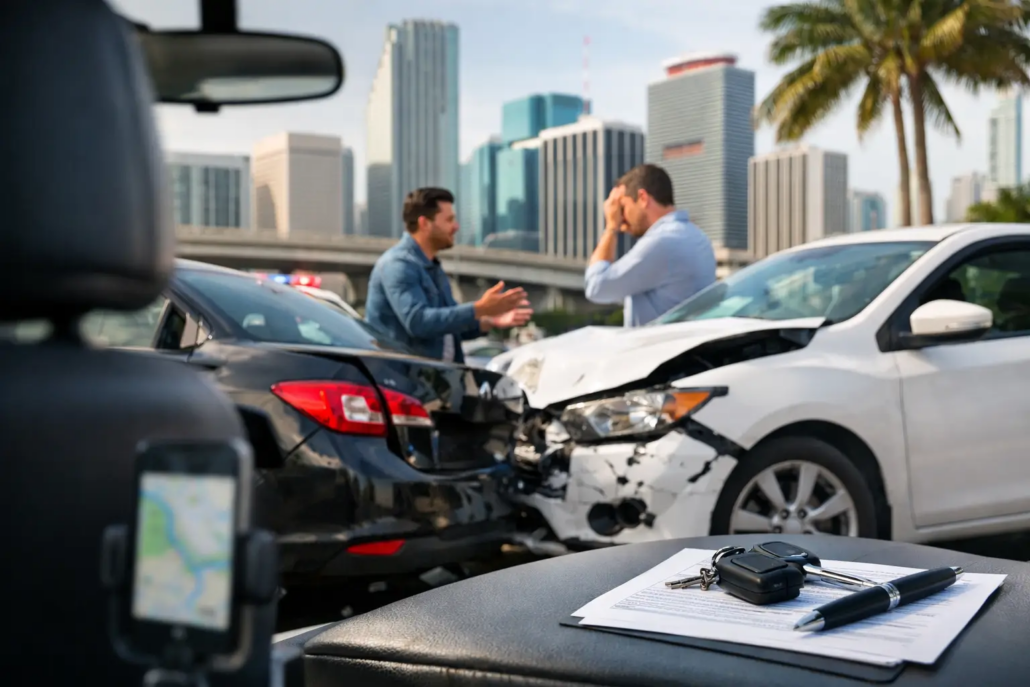
Rideshare Accident Liability Guide for Miami Riders
A rideshare crash can leave you facing the same pain, medical bills, and missed work as any other car accident – plus a confusing question that ordinary wrecks do not raise: who is responsible? This rideshare accident liability guide explains how fault and insurance often work after an Uber or Lyft collision in Florida, and why the answer can change based on what the driver was doing at the exact moment of impact.
You should not have to become an insurance expert while you are hurting. The rideshare company, its insurer, the driver, and another motorist may all try to limit responsibility. Your job is to protect your health and preserve what happened. A strong legal team can take on the fight for accountability.
Why rideshare liability is different
Rideshare drivers are generally treated as independent contractors, not traditional employees. That distinction can make it harder to hold Uber or Lyft directly liable for every careless act by a driver. Still, rideshare companies typically provide significant insurance coverage when a driver is actively transporting a passenger or heading to pick one up.
The key issue is the driver’s app status. A driver may be logged out, logged in but waiting for a ride request, on the way to collect a passenger, or carrying a passenger. Each phase can trigger different insurance coverage. A few seconds can matter. If the driver had just accepted a trip, canceled one, or was waiting for the next fare, insurers may dispute which policy applies.
That is why screenshots, trip records, app data, and the driver’s statement can be so valuable. The company controls much of that evidence, and it may not volunteer information that strengthens your claim.
Who may be responsible after the crash?
Liability depends on the facts, not the logo on the vehicle. In many cases, more than one party shares responsibility. Florida’s modified comparative negligence law generally reduces compensation by a person’s percentage of fault. If an injured person is found more than 50% responsible, recovery may be barred in most negligence cases. Insurers know this and may look for ways to shift blame.
The rideshare driver
A driver who was speeding, distracted by the app, running a red light, driving while fatigued, or following too closely may be personally liable. The driver’s own auto insurance can be relevant, especially when the driver was not logged into the app. But personal policies often exclude commercial or rideshare activity, which can create a serious coverage dispute.
Uber or Lyft insurance coverage
When a driver is available on the app but has not accepted a trip, rideshare coverage may provide limited contingent liability protection if the driver’s personal insurer does not cover the collision. Once the driver is en route to a passenger or has a passenger in the vehicle, much larger liability coverage is commonly available.
That does not mean a payment arrives automatically. The insurer will investigate fault, injuries, treatment, prior medical history, and policy terms. It may question whether the driver was truly in an active trip phase. A policy limit is not a promise of full compensation, particularly when several people are hurt in the same wreck.
Another careless motorist
Many rideshare crashes are caused by someone outside the rideshare vehicle. A drunk driver, a distracted commuter, or a motorist making an unsafe turn may bear primary responsibility. As a passenger, you are rarely at fault for the collision, but you may need to pursue the at-fault driver’s insurance first or alongside a rideshare-related claim.
Other parties
Sometimes the truth reaches beyond the drivers. A commercial vehicle company, a vehicle owner, a repair shop, or a manufacturer may have contributed to the crash. Dangerous road conditions can also raise questions about a government entity, although those cases have strict notice rules and special deadlines. No one should assume there is only one source of recovery before the evidence is reviewed.
What passengers should do after a rideshare accident
First, get medical care. Adrenaline can hide injuries, including concussions, back injuries, internal trauma, and soft-tissue damage. Prompt treatment documents the connection between the crash and your symptoms, but more importantly, it protects your health.
If you can do so safely, take photographs of the vehicles, license plates, roadway, traffic signals, visible injuries, and the rideshare driver’s information. Screenshot the trip details in the app before they disappear from view. Ask for the police report number and gather names and contact information from witnesses.
Report the crash through the rideshare app, but be careful about giving recorded statements or accepting an early settlement. A friendly adjuster may sound helpful while asking questions designed to reduce the value of your case. Do not guess about fault, minimize your pain, or sign medical authorizations that give an insurer broad access to your entire history without understanding the consequences.
Keep a simple record of how the injuries affect your life. Note missed work, canceled plans, sleep problems, childcare challenges, prescriptions, appointments, and activities you can no longer do comfortably. A claim is not just about a diagnosis on a chart. It is about what negligence has taken from your daily life.
What if you were the rideshare driver?
Rideshare drivers face a difficult position after a crash because they may be injured while also worrying about account deactivation, lost income, and insurance gaps. Report the collision accurately through the app and to your own insurer, but do not accept blame simply because you were working. The other driver may be responsible, or the facts may show shared fault.
Save proof of your app status, ride acceptance, navigation route, and communication with the passenger. If you were carrying a passenger, their account of the crash can be powerful evidence. If another motorist caused the wreck, their insurer should not be allowed to treat you as an easy target because you were behind the wheel for a rideshare platform.
The evidence that can change a claim
Rideshare cases are often won or lost on details that vanish quickly. Traffic camera footage may be erased. Witnesses forget. Vehicle damage gets repaired. App data can be difficult to obtain after months of delay.
An attorney can move quickly to preserve evidence, request relevant records, review the crash report, identify every available insurance policy, and calculate damages that go beyond the first emergency room bill. This may include future medical care, lost earning capacity, pain and suffering, property damage, and, when a family loses a loved one, wrongful death damages.
For Miami victims, the stakes can be especially high on crowded roads where tourists, delivery vehicles, commuters, and rideshare traffic meet at unpredictable intersections. A rushed insurance decision can leave an injured person carrying costs that should have been placed on the people and companies responsible.
When legal help becomes urgent
You should consider speaking with a personal injury attorney promptly if you suffered more than minor injuries, the insurers are blaming you or each other, multiple vehicles were involved, or the available coverage is unclear. The same is true if a loved one was seriously hurt or killed. Florida deadlines can apply, and waiting can make crucial evidence harder to secure.
Madalon Injury Law believes an injured person deserves more than a claim number and a quick offer. You deserve to be heard, protected, and treated with dignity while someone fights for the full measure of what this crash has cost you.
A rideshare accident may begin with confusion, but it does not have to end with you carrying the burden alone. Get the medical care you need, hold onto the evidence, and give yourself the space to heal while the fight for accountability is handled with the urgency your life deserves.