
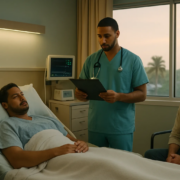
When Do Hospital Delays Become a Broward Malpractice Claim?
A car crash victim may arrive at a hospital alert, then develop worsening pain, confusion, weakness, breathing difficulty, or other concerning changes. When that happens, families often ask a difficult question: Was negligent hospital monitoring after a Broward crash involved, or was the change an unavoidable part of the injury? The answer usually requires a careful review of medical records and the timeline—not assumptions based only on the eventual outcome.
For families in Broward County and Fort Lauderdale, FL, Joseph Madalon can help explain the issues that may matter when evaluating a potential medical malpractice and personal injury claim. This article discusses warning signs that may deserve attention, how to organize a hospital timeline, and why delayed escalation or incomplete neurological monitoring can be legally significant. It also explains what information an attorney may need before assessing whether the care met the applicable standard.
What May Indicate Negligent Monitoring Medical Malpractice in Broward County?
Hospital monitoring is more than recording a patient’s vital signs once. Depending on the patient’s injuries and condition, the care plan may call for repeated assessments, neurological checks, fall precautions, pain evaluations, medication observation, or prompt communication with a physician. The appropriate level of monitoring depends on the patient’s presentation, orders, symptoms, and changing condition.
A concerning event does not automatically establish negligence. A patient can worsen despite appropriate care, and medical records may contain explanations that are not apparent to family members. Still, certain facts may justify closer review.
Warning signs families may remember
- A patient repeatedly used a call bell but did not receive timely assistance.
- A family member reported a change in alertness, movement, speech, pain, or breathing, but the concern was not documented or escalated.
- Scheduled rounds, reassessments, or neurological checks appear to be missing or inconsistent.
- Abnormal vital signs were recorded without a clear response, repeat measurement, or physician notification.
- A physician was notified only after a substantial change, emergency intervention, or transfer to intensive care.
- The patient’s condition changed rapidly after medication, a procedure, discharge planning, or a move between units.
These facts are leads, not conclusions. In Broward County, a medical negligence analysis generally focuses on the care provided, the circumstances known to the healthcare professionals, and whether a harmful delay may have contributed to additional injury.
How Can Families Build a Timeline After a Hospital Monitoring Error?
Memory can become uncertain during a frightening hospitalization. A written chronology can help preserve what the family observed and give a lawyer a clearer starting point. It should distinguish between what someone personally saw, what a staff member said, and what appears in a medical record.
A useful timeline may include:
- The crash, emergency transport, hospital arrival, imaging, diagnoses, and initial treatment.
- The times when symptoms changed, including confusion, unusual sleepiness, increasing pain, weakness, vomiting, shortness of breath, or difficulty communicating.
- Call-bell requests, conversations with nurses or other staff, and reports made by family members.
- Documented vital signs, neurological assessments, medication administration, tests, consultations, and physician notifications.
- The moment an emergency response occurred, a procedure was ordered, or the patient was transferred to intensive care.
- Later diagnoses, additional treatment, rehabilitation, limitations, and expenses connected to the deterioration.
Families may also preserve discharge papers, portal messages, photographs of visible conditions when appropriate, names or descriptions of witnesses, and notes made shortly after conversations. They should avoid altering original records or publicly posting private medical details. Medical records are often complex, and a missing entry does not necessarily prove that an assessment never occurred; conversely, a chart entry does not by itself establish that the care was adequate.
In Fort Lauderdale, FL, a lawyer evaluating possible delayed response medical malpractice in Florida may compare the timeline with orders, nursing flowsheets, medication records, monitoring protocols, consultation notes, and transfer documentation. Florida medical negligence claims can involve procedural requirements and medical-expert issues, and applicable rules may change. A qualified Florida attorney can explain how those requirements may apply to the facts.
What Happens When Deterioration Is Not Escalated Promptly?
The central legal question is often not simply whether a patient became worse. It may be whether a reasonably careful healthcare professional, under comparable circumstances, should have recognized the change, performed an appropriate reassessment, notified the responsible physician, ordered additional evaluation, or escalated care sooner. A lawyer and medical expert may need to examine the patient’s condition, the hospital’s records, and the connection between any delay and the claimed harm.
Families commonly make avoidable evidence problems during this process. They may rely on one dramatic event, assume that an intensive-care transfer proves earlier negligence, or focus on a staff member’s name rather than the sequence of care. More useful steps generally include:
- Keep a private, dated account of observations and communications.
- Request and preserve complete medical records through appropriate channels.
- Save invoices, employment records, rehabilitation information, and other documents showing the impact of additional harm.
- Avoid guessing about the medical cause of a decline in written complaints or online posts.
- Ask an attorney whether records should be reviewed by an appropriate medical expert.
A potential claim may involve both the original crash and later hospital care. Those issues can require separate analyses: the driver or another responsible party may be evaluated under Florida personal injury principles, while the hospital-monitoring question may involve medical negligence standards and causation. Establishing that monitoring fell below an accepted standard is not enough by itself; the evidence may also need to show that the failure probably caused or contributed to a distinct injury.
Frequently Asked Questions
Does a transfer to intensive care prove negligent hospital monitoring after a crash?
No. An intensive-care transfer may reflect a serious underlying injury, an expected complication, or a sudden change despite appropriate treatment. It can, however, identify an important point in the timeline. Records before and after the transfer may show symptoms, vital signs, assessments, notifications, and interventions. A Florida attorney and qualified medical reviewer can consider those facts together rather than treating the transfer alone as proof of malpractice.
Can family observations be relevant to a hospital monitoring claim in Broward County?
Yes. Family members may have observed changes that are not fully captured in the chart, such as confusion, unusual drowsiness, breathing changes, or repeated requests for help. Their notes and testimony may provide context about when a concern became apparent and who was told. Family observations are not a substitute for medical evidence, but they may help identify records, witnesses, and questions for further review.
What records may show whether neurological checks were completed?
Depending on the hospital and patient, relevant materials may include nursing assessments, flowsheets, vital-sign records, physician progress notes, emergency-response records, medication administration records, imaging reports, consultation notes, and transfer documentation. The exact record set varies. A lawyer may request records through formal processes and work with a medical expert to interpret whether the documented assessments matched the patient’s condition and care orders.
Is a separate claim possible for harm that occurred during treatment after a crash?
Potentially, but the answer depends on the facts, the evidence, causation, and applicable Florida procedures. A patient may have a claim related to the collision and a separate theory concerning later medical care, or the issues may overlap. The legal analysis should account for the original injuries, the patient’s baseline condition, the alleged delay, and any additional harm. A licensed attorney can evaluate those issues confidentially.
How Joseph Madalon Can Help
Joseph Madalon is dedicated to helping injured people and families understand the legal issues that may follow a collision and subsequent hospital care. The firm can review the available timeline, identify potentially significant records, and assess whether a possible monitoring error warrants further investigation. That review may include questions about neurological checks, vital-sign responses, call-bell concerns, physician notification, and the relationship between any delay and the patient’s harm.
If a loved one worsened after a Broward County crash, contact Joseph Madalon for a free consultation or case evaluation. The firm is committed to fighting for your rights while explaining your options without promising a particular outcome.
The information in this article is for educational purposes only and does not constitute legal advice. Contact a qualified attorney licensed in Broward County; Fort Lauderdale, FL for advice specific to your situation.