
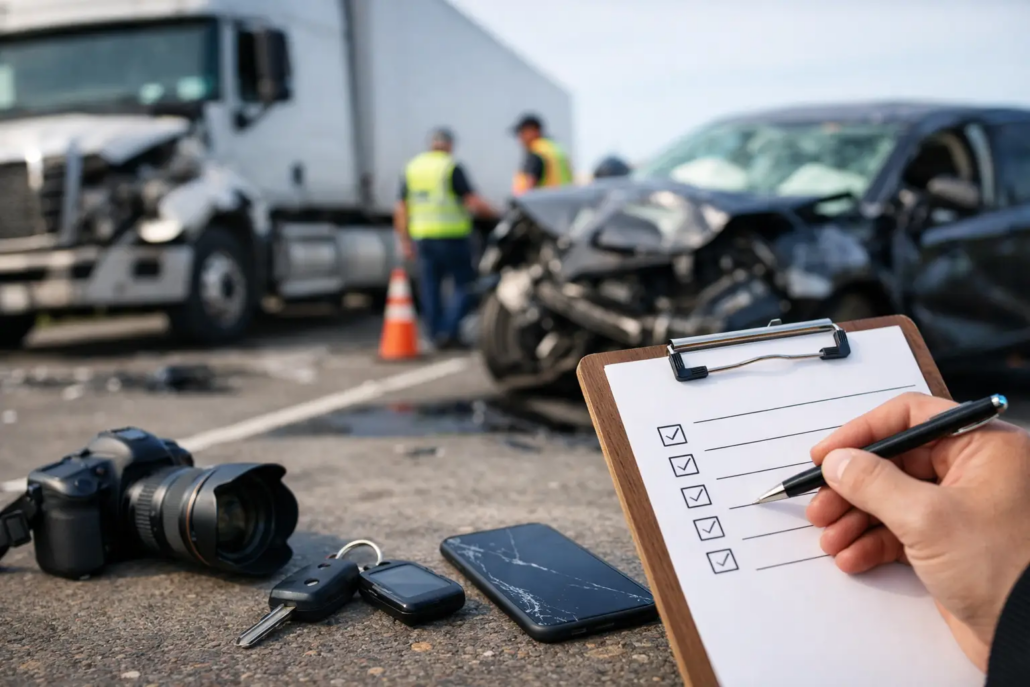
Truck Accident Evidence Checklist After a Crash
A truck crash can leave you shaken, hurt, and facing a scene that changes by the minute. A strong truck accident evidence checklist helps protect the truth before a trucking company, insurer, or cleanup crew has the chance to make crucial proof disappear. This is not just paperwork. The evidence may determine whether the people responsible are held accountable for the harm they caused.
The First Hours Matter More Than Most People Realize
Commercial truck accidents are different from ordinary car wrecks. A collision involving an 18-wheeler, delivery truck, dump truck, or other commercial vehicle can cause life-altering injuries, yet the evidence is often controlled by the very companies that may be responsible.
The truck may be moved quickly. Electronic data can be overwritten. A damaged vehicle can be repaired. Video from a nearby business may be erased within days. Meanwhile, an insurance company may contact you while you are in pain, medicated, or still trying to understand what happened.
Your first responsibility is your safety. Call 911, accept medical care, and do not put yourself in danger to gather information. If you can safely document the scene, do it. If you cannot, a family member, witness, or attorney may be able to help preserve what matters.
Truck Accident Evidence Checklist: Start With What Can Disappear
At the scene, focus on facts that cannot be recreated later. Take photos and short videos from a safe location. Capture the overall roadway, vehicle positions, traffic signals, skid marks, debris fields, weather conditions, road construction, and visible damage. Photograph your injuries if you are physically able, but never delay emergency treatment for a photo.
If you can, collect the following information:
- The truck driver’s name, employer, phone number, commercial driver’s license information, and insurance details
- The trucking company name, truck number, trailer number, license plate, and any identifying logos or USDOT numbers
- Names and contact information for witnesses, including passengers and people who stopped to help
- The responding police agency, officers’ names, report number, and the location of the crash
- Photos or videos of damaged vehicles, cargo, road conditions, nearby cameras, and any visible signs of fatigue, impairment, or unsafe driving
- The names of tow companies, emergency responders, and anyone who handled the truck or your vehicle after the crash
Do not argue with the truck driver or apologize for the accident. A simple statement such as “I’m not able to discuss fault right now” is enough. Even a well-meaning comment can later be twisted by an insurer trying to shift blame.
Get Medical Care and Keep the Record of It
Some of the most serious crash injuries do not show their full force at the roadside. Head injuries, internal bleeding, spinal damage, and soft-tissue injuries can worsen over hours or days. Get evaluated promptly, follow your doctor’s instructions, and tell medical providers every symptom you are experiencing.
Keep copies of discharge papers, prescriptions, bills, imaging results, appointment notices, and work restrictions. Start a simple daily record of your pain, sleep problems, missed work, limitations, and emotional strain. This record can show the human cost of the collision in a way a medical code never can.
The Trucking Company May Hold the Most Valuable Proof
The evidence you see at the crash scene is only part of the story. Trucking companies often possess records that reveal whether the driver or company ignored safety rules before the collision.
A truck may contain an electronic control module, often called a black box, that can record speed, braking, throttle use, hard turns, and other data. Many commercial fleets also use electronic logging devices that track driving hours and rest periods. These records can be critical when there are questions about speeding, distracted driving, fatigue, or pressure to meet an unrealistic delivery deadline.
Other records may reveal a larger pattern of negligence. Depending on the crash, an attorney may seek driver qualification files, drug and alcohol testing records, dispatch communications, GPS data, inspection reports, maintenance logs, cargo-loading documents, training materials, and prior safety violations. Dash camera footage, surveillance video, and cell phone records may also matter.
You should not try to demand these records on your own from a trucking company or its insurer. They may deny responsibility, limit what they provide, or ask you to sign documents that protect their interests. A knowledgeable truck accident attorney can send a formal preservation letter demanding that evidence be retained before it is lost, destroyed, or overwritten.
Do Not Let an Insurer Define the Story
After a serious truck crash, insurance adjusters move quickly because they understand what is at stake. Their questions can sound compassionate, but their job is to control the claim and reduce what their company pays.
You can provide basic information needed to open a claim, but be careful about recorded statements, broad medical authorizations, and quick settlement offers. You may not yet know the full extent of your injuries, future treatment needs, lost income, or the evidence that could expose wrongdoing by the trucking company.
A settlement may be appropriate in some cases, but only after the facts are clear and the impact on your life has been honestly evaluated. Once you sign a release, you may give up the right to seek additional compensation later, even if your condition becomes worse.
Preserve Evidence in Your Own Hands
Evidence is not limited to the truck or police investigation. Your own materials can help establish the timeline and show how the collision changed your life.
Save the clothes and shoes you wore during the crash if they are damaged or bloodstained. Do not repair or sell your vehicle until it has been properly documented and inspected. Keep all correspondence from insurers, medical providers, employers, tow yards, and repair shops. Save screenshots of texts, call logs, emails, and messages related to the collision.
If the crash happened near a business, condominium, intersection, or parking lot, video may exist. Act fast. Many surveillance systems automatically record over footage after a short period. An attorney can identify potential sources and request preservation before that window closes.
Be Honest About What You Do Not Know
You do not need to solve the case at the roadside. In fact, guessing about speed, fault, or what the truck driver was doing can create confusion. Share what you personally saw, heard, and felt. Let the physical evidence, witnesses, records, and investigation fill in the rest.
Truck crash claims can involve multiple responsible parties. The driver may have been careless, but the trucking company may have failed to train, supervise, inspect, or maintain. A cargo company, broker, vehicle manufacturer, maintenance contractor, or another driver could also share responsibility. The facts determine who should answer for the damage done.
When to Ask for Legal Help
It is wise to speak with a truck accident lawyer as soon as possible when injuries are serious, a loved one has been killed, fault is disputed, or a commercial vehicle was involved. Early legal action can protect evidence while you focus on medical care and your family.
At Madalon Injury Law, we understand that a truck collision is not just a claim number. It is your health, your income, your independence, and your future. You deserve a team that treats you like a person in crisis, not a file to be processed, and that is prepared to fight when powerful companies refuse to do what is right.
The most helpful step you can take today is simple: protect your health, save every document you receive, and get help preserving the evidence before the truth is taken out of your hands.