
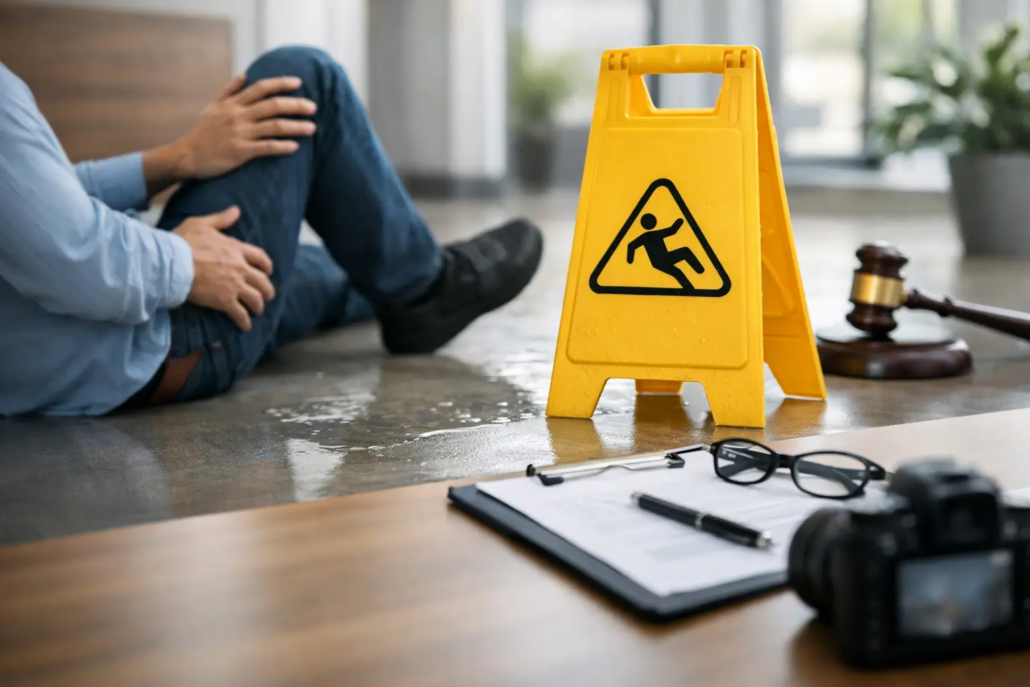
How to Prove a Slip and Fall Claim
A slip and fall can wreck your week in a second. One wet floor, a broken stair, poor lighting, or a spill left sitting too long can leave you in pain, missing work, and wondering why the property owner is already acting like none of it was their fault. If you are trying to understand how to prove a slip and fall claim, the truth is simple – your case is won or lost by evidence.
It is not enough to say you fell and got hurt. To recover compensation, you usually need to show that a dangerous condition existed, that the owner or business knew or should have known about it, that they failed to fix it or warn you, and that this failure caused your injuries. That sounds straightforward until evidence disappears, surveillance footage gets erased, and insurance companies start looking for a reason to blame you.
How to prove a slip and fall claim starts with liability
Most slip and fall cases turn on negligence. In plain English, that means someone responsible for the property failed to use reasonable care. A grocery store may have ignored a spill. An apartment complex may have let a handrail stay loose. A hotel may have allowed a walkway to remain dangerously slick.
To prove the claim, you need more than the fact that you fell. Property owners are not automatically liable just because an accident happened on their premises. The key question is whether they created the hazard, knew about it, or should have known about it through reasonable inspections.
That is why timing matters so much. If a drink spilled two seconds before your fall, the defense may argue there was no realistic chance to clean it up. If the spill sat there for thirty minutes with employees walking past it, that is a very different case. The details matter, and they matter early.
The evidence that makes or breaks a slip and fall case
Strong slip and fall claims are built on layers of proof. One photo helps. Five forms of evidence working together help far more.
Photos and video of the hazard
If you are physically able, take pictures right away. Photograph the exact condition that caused the fall, whether it was water on the floor, cracked pavement, uneven tile, poor lighting, missing warning signs, or debris in a walkway. Take close-up shots and wider shots that show the surrounding area.
Video can be even more powerful because it captures the condition as it existed in real time. If there are security cameras nearby, that footage may show not only the fall but also how long the hazard was present. That can be crucial when proving notice.
Incident reports and witness statements
Report the fall to the manager, owner, landlord, or whoever is in charge. Ask that an incident report be created. Be factual. Do not exaggerate, and do not guess. If you do not know exactly what caused the fall, say that. If you do know, describe it clearly.
Witnesses matter because they can confirm the hazard, the lack of warning signs, your fall, or even how long the dangerous condition had been there. A witness who says, “That leak had been there all afternoon,” can change the entire direction of a case.
Medical records that connect the fall to your injuries
Insurance companies attack gaps in treatment because they know juries pay attention to them. If you wait too long to see a doctor, the defense may argue you were not seriously hurt or that something else caused your injury.
Medical records do two jobs. They document what injuries you suffered, and they help connect those injuries to the fall. That connection is critical. If you hurt your back, shoulder, knee, or head, prompt treatment creates a timeline that supports your claim.
Proof of notice
One of the hardest parts of these cases is showing that the property owner had notice of the dangerous condition. Actual notice means they knew about it. Constructive notice means they should have known because it existed long enough or happened often enough that a reasonable owner would have discovered it.
Proof of notice can come from surveillance footage, maintenance logs, cleaning records, employee testimony, prior complaints, past incidents, or photos showing the condition was old and obvious. A dirty puddle with track marks through it may suggest it had been there for a while. A broken step with worn edges may show a long-standing defect.
How to prove a slip and fall claim when the property owner blames you
This happens all the time. The insurance company may say you were distracted, wearing the wrong shoes, walking too fast, looking at your phone, or ignoring an open and obvious hazard. Their goal is not fairness. Their goal is to reduce what they pay.
That does not mean your case is over. Many valid slip and fall claims involve shared-fault arguments. The issue becomes whether the property owner still failed in their duty to keep the premises reasonably safe.
For example, maybe a hazard was visible, but there was no safe way around it. Maybe poor lighting made it harder to see. Maybe the danger blended into the floor. Maybe there should have been cones, mats, warning signs, or repairs. These are not small details. They are the facts that push back against blame-shifting.
Your footwear, your actions, and the overall environment all matter. So does your honesty. If there is a weakness in the case, it is better to address it directly than pretend it does not exist.
What to do after a slip and fall to protect your claim
The first hours and days after a fall can shape the entire case. Get medical care as soon as possible. Report the incident. Preserve the shoes and clothing you were wearing. Take photos of visible injuries as bruising develops. Keep receipts, discharge papers, diagnoses, and follow-up recommendations.
It also helps to write down what you remember while it is still fresh. Note where you were, what you saw, what the surface looked like, whether there were warning signs, who spoke to you, and what they said. Memory fades quickly, especially when you are in pain.
Be careful with recorded statements and quick settlement offers. Insurers often sound helpful in the beginning, but early conversations can be used to lock you into incomplete facts before the full extent of your injuries is known.
Common problems that can weaken a claim
Some cases are difficult because the hazard was cleaned up before it could be documented. Others suffer because the injured person did not seek treatment right away. Sometimes there are no witnesses. Sometimes the injured person posts on social media and the defense tries to use a smiling photo against them.
None of these issues automatically destroys a case, but they create room for arguments the other side will gladly make. That is why early legal help can make such a difference. A lawyer can send preservation notices, request surveillance footage, investigate prior incidents, gather records, and build the story before the evidence disappears.
If you are looking for information after an accident in Florida, some people also start here: https://accident.usattorneys.com/florida/. Still, every slip and fall case depends on its own facts, and broad information is never a substitute for a direct review of what happened to you.
Why slip and fall claims are often harder than people expect
These cases sound simple until the defense starts working. Businesses and property owners often deny they had enough time to discover the hazard. They may claim the area was inspected. They may argue the condition was obvious. They may question whether your injury was preexisting.
That is exactly why evidence has to tell a clear story. The strongest cases show not only that a dangerous condition existed, but that it should never have been allowed to remain. They show medical proof, witness support, and a timeline the defense cannot easily explain away.
When legal help changes the outcome
A serious fall can leave you with surgery, therapy, lost income, and pain that does not disappear just because the floor dried up. If you are facing that kind of fallout, this is not just paperwork. It is your health, your finances, and your ability to move forward.
A firm like Madalon Injury Law approaches these cases the way injured people deserve to be treated – with urgency, respect, and a fight-first mindset. The right legal team does more than file a claim. They protect the evidence, deal with the insurance company, and push for accountability when a property owner tries to avoid responsibility.
If you were hurt in a fall, trust what your body is telling you and take the situation seriously. The strongest claim usually starts before the property owner has time to rewrite the story.







Leave a Reply
Want to join the discussion?Feel free to contribute!