
What Evidence Matters After a Florida Lane-Splitting Crash?
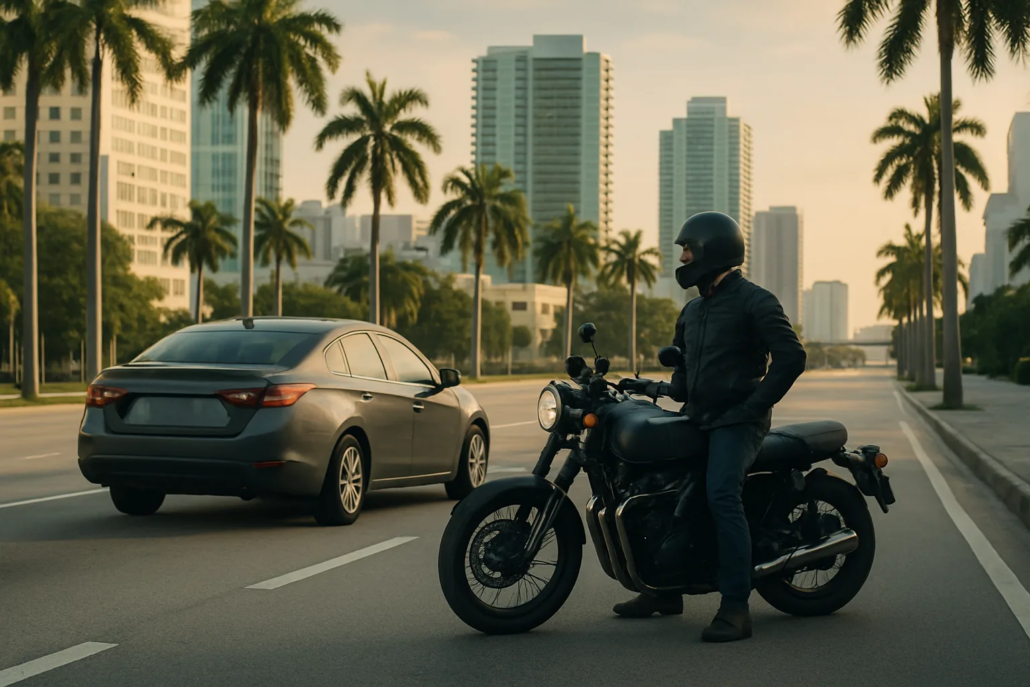
A motorcycle moves between two lines of slow traffic on a Miami roadway. A driver says the rider appeared suddenly; the rider says the driver moved across the lane. When accounts conflict, the question is not simply who received a citation. It may also involve vehicle positions, traffic signals, video, roadway markings, visibility, and the timing of each movement. For a practical overview of preserving accident evidence after a Miami crash, riders and drivers should act before footage is overwritten or vehicles are repaired.
So, is lane splitting legal after a Miami motorcycle crash? Florida law generally prohibits a motorcycle from operating between lanes of traffic or rows of vehicles. However, an alleged traffic violation does not automatically resolve every civil injury claim. Joseph Madalon helps readers understand the difference between the traffic rule and the broader evidence needed to assess responsibility. This article explains Florida’s lane-splitting rule, what evidence to preserve, how insurance and injuries may be evaluated, and why disputed positioning deserves careful review.
Is Lane Splitting Legal in Florida, and How Does It Affect a Miami Crash?
Florida’s motorcycle traffic rules are important starting points in a Florida lane splitting motorcycle accident. Florida Statutes section 316.2095 generally prohibits a motorcycle operator from passing between lanes of traffic or rows of vehicles. In practical terms, a rider should not assume that slow or stopped traffic makes traveling between lanes lawful in Florida. “Lane filtering,” often used to describe moving between stopped or slow vehicles, should not be treated as automatically permitted merely because the motorcycle is moving cautiously.
Lane splitting is only one part of the liability analysis
A citation may be relevant evidence, but it is not necessarily the final word in a personal injury claim. Investigators may still need to determine whether a driver changed lanes, opened a door, turned without a clear view, followed too closely, or failed to notice a motorcycle. They may also examine whether the rider was traveling in a lawful lane before the impact and whether another road user had time to see and avoid the motorcycle.
The strongest evidence in an accident case often includes objective material that can test both versions of events. In Miami, that may include traffic-camera footage, nearby business video, vehicle damage patterns, lane markings, and photographs showing the roadway’s geometry. The relevant question is usually how the evidence supports a complete sequence of movements, not whether one person can attach a label to the crash.
What Evidence Should You Preserve After a Florida Lane-Splitting Crash?
A disputed motorcycle crash can become harder to evaluate as vehicles are moved, video systems overwrite files, and witnesses forget details. In Miami, riders and drivers may want to preserve the following information, generally without altering original files or guessing about fault:
- Dashcam footage from the motorcycle, car, or nearby vehicles, including several minutes before and after impact.
- Helmet-camera video and its original metadata, if available.
- Wide and close photographs of the roadway, lane markings, traffic signals, debris, vehicle damage, and final vehicle locations.
- The names and contact information of witnesses, along with a neutral description of what each person observed.
- Photographs of helmets, protective clothing, and other equipment before repair, replacement, or disposal.
- Police or agency information, including the incident number, citation, diagram, and any exchange of driver information.
Do not edit, crop, or overwrite original recordings. A short clip may omit the speed, spacing, signal, or lane movement that occurred immediately before the collision. If vehicles were moved for safety, note their original positions as accurately as possible and preserve photographs showing where they were found.
A citation can help identify an alleged traffic violation, but it may not show the entire event. For example, a citation directed at a rider may not answer whether a driver also changed lanes without checking for a motorcycle. Conversely, a driver’s failure to receive a citation does not establish that the driver had no civil responsibility. Witness interpretation, visibility, impact points, and the roadway layout can all matter.
What Happens After a Miami Motorcycle Crash Involving Disputed Lane Position?
After a crash, medical documentation and insurance questions often develop alongside the fault investigation. A rider should consider prompt medical evaluation when injured, because some symptoms may not be obvious immediately. This is not a diagnosis or treatment recommendation; a qualified medical professional must address medical concerns. Preserve the helmet and protective gear, follow medical instructions, and keep records of symptoms and appointments. These steps can help document the condition without assuming how serious an injury is. Information about brain injury claims after a motorcycle crash may be relevant when head trauma or concussion concerns arise.
Insurance coverage is a separate issue from fault. Review the difference between Florida PIP and bodily injury coverage carefully, because available benefits can depend on the policies, vehicle ownership, injuries, and facts involved. Motorcycle coverage does not always operate the same way a person expects, and policy language may affect available sources of payment for medical expenses or other losses.
Common problems after a disputed crash include:
- Speculating about fault. A rider or driver may remember only part of a fast-moving event. Accurate facts are more useful than assumptions about speed, distance, or intent.
- Giving up original evidence. Deleting video, repairing a motorcycle, or discarding a helmet can remove information that later becomes important.
- Accepting a quick insurance position. A carrier may ask for a recorded statement or propose an early resolution before all evidence and medical information are available. Guidance on handling insurer pressure after a Miami crash explains why requests should be understood before a person responds.
Depending on the circumstances, an attorney may evaluate citations, traffic-camera footage, witness accounts, vehicle damage, available insurance, and medical records together. That analysis can address lane splitting crash liability without assuming that a single fact decides the claim.
Frequently Asked Questions
Does Florida law allow a motorcycle to ride between lanes of stopped traffic?
Generally, no. Florida Statutes section 316.2095 prohibits a motorcycle operator from passing between lanes of traffic or rows of vehicles. The terms “lane splitting” and “lane filtering” are sometimes used differently in public discussions, but riders should not assume that either maneuver is lawful in Florida merely because traffic is stopped or moving slowly. Laws can change, and the facts of a specific roadway movement may matter to a later claim.
Can a rider pursue an injury claim after receiving a traffic citation?
Possibly. A citation may be considered when evaluating a motorcycle traffic violation injury claim, but it does not necessarily resolve every issue in a civil case. The investigation may also consider a driver’s lane change, visibility, speed, lookout, vehicle position, and other conduct. Insurance coverage, medical evidence, witness accounts, and comparative-fault principles may affect the analysis. A licensed attorney can assess the particular facts and applicable Florida law.
What if no one recorded the motorcycle crash?
A claim may still be evaluated without video. Photographs, vehicle damage, roadway evidence, witness testimony, police materials, medical records, and electronic data may help reconstruct what happened. It is useful to preserve these materials promptly because vehicles may be repaired, roadway conditions may change, and witnesses may become difficult to locate. The absence of a recording does not by itself prove or disprove either person’s account.
Should I speak with the other driver’s insurer after a Miami crash?
An insurer may request information about the collision, injuries, or property damage. People should provide accurate information and avoid guessing, but they may also want to understand what is being requested before giving a recorded statement or discussing settlement. Coverage and liability questions can be separate. Depending on the circumstances, a qualified Florida attorney may explain the process and help a person evaluate available options.
How Joseph Madalon Can Help
Joseph Madalon is dedicated to helping injured riders and other crash participants understand the evidence and insurance issues that may follow a disputed collision. The firm can evaluate whether dashcam or helmet-camera footage exists, identify witnesses, review roadway photographs and vehicle positions, examine citations, and consider how medical records and available coverage relate to the claim. This approach does not treat a traffic citation as the entire liability analysis.
Readers facing disputed fault, serious injuries, missing video, or insurer pressure can review what a Miami accident lawyer can investigate after a motorcycle crash. Joseph Madalon is committed to fighting for clients’ rights and is ready to evaluate your situation. Contact the firm for a free consultation or case evaluation.
The information in this article is for educational purposes only and does not constitute legal advice. Contact a qualified attorney licensed in Miami, FL for advice specific to your situation.






Leave a Reply
Want to join the discussion?Feel free to contribute!