
Madalon Injury Lawyers
  • HOME
  • ABOUT US
    • LEGAL TEAM
    • RESULTS
    • VIDEOS
    • BLOG
  • PRACTICE AREAS
  • CONTACT
  • CALL TODAY
    888-888-5666
  • Menu Menu

Tag Archive for: Florida lane splitting motorcycle accident

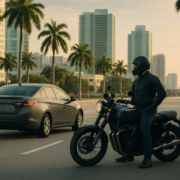
Florida lane-splitting motorcycle accident scene on a Miami roadway with a rider and surrounding traffic

How Do Driver Actions Affect Florida Lane-Splitting Claims?

October 13, 2026/0 Comments/in Personal Injury/by publisher

A rider in Miami, FL, may hear soon after a crash that an insurer believes they were lane-splitting—and worry that this allegation ends any chance of an injury claim. It does not automatically answer who caused the collision or whether another person’s conduct contributed. Florida restricts lane-splitting, but the facts still matter when assessing how a crash happened and how responsibility may be divided. Joseph Madalon can help readers understand the questions that may arise when a rider’s lane position is disputed. This article explains Florida’s rule, how evidence such as video, vehicle positions, witness accounts, and the crash report may be evaluated, and why another driver’s actions can remain relevant. It also addresses how comparative fault and insurance issues differ from the basic question of what caused the collision.

What does Florida’s lane-splitting rule mean for a motorcycle accident claim?

Florida law generally prohibits operating a motorcycle between lanes of traffic or between adjacent lines or rows of vehicles. This restriction is commonly called the lane-splitting rule. It is important to distinguish lane-splitting from a motorcycle’s use of a full lane or other riding situations; the details and surrounding traffic conditions can affect how a particular event is understood.

A possible violation is relevant, but it is not the same thing as a complete investigation of a crash. The key questions may include where each vehicle was, what each person was doing, and whether the alleged conduct contributed to the collision or resulting injuries. The fact that a rider was accused of lane-splitting does not, by itself, establish every element of another party’s account or resolve all questions of fault.

How can comparative fault affect a Florida claim?

Florida follows a modified comparative-fault approach in many negligence cases. Responsibility may be apportioned among the people whose conduct contributed to an injury. Under Florida law, a person found to be more than 50% responsible generally cannot recover damages in a negligence action. If a person is not above that threshold, an award may be reduced according to their share of fault. How these rules apply depends on the evidence, claims, and applicable law.

For a Miami rider, the practical issue is not simply whether someone used the word “lane-splitting.” It is how the available facts relate to the crash and each party’s conduct.

What evidence can clarify a Miami lane-splitting accident claim?

Evidence can help test accounts of lane position and timing. Useful material may include:

  • Video from a nearby business, traffic camera, vehicle camera, or other available recording.
  • Photographs showing vehicle positions, damage, roadway layout, and visible marks after the collision.
  • Witness accounts describing traffic flow, lane changes, signals, and the moments before impact.
  • The crash report, which may record observations and statements but should not automatically be treated as the final decision on civil liability.

These sources may need to be considered together. For example, a recording could show the vehicles’ relative positions, while photographs and witness statements provide context about a turn or a sudden movement. A report may preserve useful initial details, but it is one part of the record rather than a substitute for evaluating all available evidence. For more on gathering and comparing these materials, see evidence that may clarify a Florida lane-splitting crash.

Why the other driver’s actions still matter

A driver’s turn, lane change, signal use, or visibility may also be relevant. At an intersection, for instance, signal timing and turning movements may help explain how the vehicles came together; see how traffic signals and turning movements affect Miami motorcycle claims. If a rider says a vehicle moved unexpectedly and prompted an evasive maneuver, evidence may also matter even when the vehicles did not touch. This guide explains proving fault when a driver forces a Miami motorcyclist to swerve. Any suggestion that a driver was distracted should likewise be assessed through available facts, not assumed; evidence of distracted driving in a Miami motorcycle crash may be relevant where supported.

What steps and related issues should a rider understand?

After a crash, accounts can differ, and memories may change as time passes. In general, preserving available information can help an attorney evaluate a disputed lane position and the sequence of events. If available, relevant materials may include the crash report, photographs, contact details for witnesses, and information about nearby cameras. The particular evidence that matters will depend on the circumstances, and some recordings may not be retained indefinitely.

A rider should also understand that a traffic allegation, a civil injury claim, and payment of medical expenses are related but separate issues. A crash report or citation may be relevant to a liability dispute, but it does not necessarily decide every civil issue. Similarly, whether an insurance policy pays particular expenses is not the same as deciding who caused the crash. Motorcycle riders generally do not have the same Florida PIP coverage as occupants of covered cars; the details depend on the policies and circumstances. For a separate explanation, see whether Florida PIP covers Miami motorcycle crash bills.

In Miami-Dade County, the responsible law-enforcement agency’s crash report can be one starting point for understanding what was documented. It may not capture every angle, witness, or later-discovered recording. A careful review considers the report alongside other evidence and the applicable Florida rules. Laws and procedures can change, so the current law and facts should be assessed for the specific situation.

Frequently Asked Questions

Does a crash report decide who is at fault in a Miami motorcycle accident?

Not necessarily. A crash report may document statements, observations, and other information gathered by responding officers, but a civil claim can involve additional evidence and legal questions. Insurers and, if a dispute proceeds, the court may assess the full circumstances. In Miami-Dade County, the report can be a useful source, but it should not be assumed to resolve every issue of responsibility.

What if the other driver denies changing lanes?

Conflicting accounts are one reason independent evidence may matter. Available video, damage patterns, photographs of vehicle positions, witness observations, and roadway features may help clarify the sequence of events. No single item necessarily answers the question. An attorney can evaluate what evidence exists, whether it supports either account, and how Florida’s rules may apply to the particular facts.

Can more than one person share responsibility for a motorcycle crash?

Yes. Florida negligence claims may involve fault assigned to more than one person when multiple people’s conduct contributed to an injury. A rider’s alleged lane-splitting and another driver’s actions may both be examined. The effect of any fault allocation depends on the applicable law and evidence; Florida’s modified comparative-fault rule can limit recovery when a claimant is found more than 50% responsible.

Is an insurance coverage decision the same as a decision about fault?

No. An insurer’s decision about whether a particular policy covers an expense is a coverage question. A liability decision concerns who may be legally responsible for the crash and resulting harm. Different policies, exclusions, and facts can affect coverage. A coverage dispute does not, by itself, establish who caused the collision, and a fault dispute does not answer every question about available insurance benefits.

How Joseph Madalon Can Help

Joseph Madalon is dedicated to helping injured people understand the issues that may arise after a motorcycle crash. When lane-splitting is alleged, evaluating the situation may involve comparing the crash report with available video, photographs, witness accounts, vehicle positions, and evidence about other drivers’ conduct. The effect of Florida’s traffic and comparative-fault rules depends on the specific facts, and no article can determine how they apply to an individual claim. If you have questions after a Miami motorcycle accident, contact Joseph Madalon to discuss your situation and request a consultation or case evaluation.

The information in this article is for educational purposes only and does not constitute legal advice. Contact a Florida-licensed attorney for advice specific to your situation; laws vary by location and may have changed since publication.

https://madalonlaw.com/wp-content/uploads/2026/10/how-driver-actions-affect-florida-lane-splitting-claims-6232-featured-publisher.webp 1024 1536 publisher https://madalonlaw.com/wp-content/uploads/2026/03/logo-white-300x182.webp publisher2026-10-13 11:50:132026-10-13 11:50:13How Do Driver Actions Affect Florida Lane-Splitting Claims?
Florida lane splitting motorcycle accident scene on a Miami roadway

What Evidence Matters After a Florida Lane-Splitting Crash?

September 13, 2026/in Personal Injury/by publisher

A motorcycle moves between two lines of slow traffic on a Miami roadway. A driver says the rider appeared suddenly; the rider says the driver moved across the lane. When accounts conflict, the question is not simply who received a citation. It may also involve vehicle positions, traffic signals, video, roadway markings, visibility, and the timing of each movement. For a practical overview of preserving accident evidence after a Miami crash, riders and drivers should act before footage is overwritten or vehicles are repaired.

So, is lane splitting legal after a Miami motorcycle crash? Florida law generally prohibits a motorcycle from operating between lanes of traffic or rows of vehicles. However, an alleged traffic violation does not automatically resolve every civil injury claim. Joseph Madalon helps readers understand the difference between the traffic rule and the broader evidence needed to assess responsibility. This article explains Florida’s lane-splitting rule, what evidence to preserve, how insurance and injuries may be evaluated, and why disputed positioning deserves careful review.

Is Lane Splitting Legal in Florida, and How Does It Affect a Miami Crash?

Florida’s motorcycle traffic rules are important starting points in a Florida lane splitting motorcycle accident. Florida Statutes section 316.2095 generally prohibits a motorcycle operator from passing between lanes of traffic or rows of vehicles. In practical terms, a rider should not assume that slow or stopped traffic makes traveling between lanes lawful in Florida. “Lane filtering,” often used to describe moving between stopped or slow vehicles, should not be treated as automatically permitted merely because the motorcycle is moving cautiously.

Lane splitting is only one part of the liability analysis

A citation may be relevant evidence, but it is not necessarily the final word in a personal injury claim. Investigators may still need to determine whether a driver changed lanes, opened a door, turned without a clear view, followed too closely, or failed to notice a motorcycle. They may also examine whether the rider was traveling in a lawful lane before the impact and whether another road user had time to see and avoid the motorcycle.

The strongest evidence in an accident case often includes objective material that can test both versions of events. In Miami, that may include traffic-camera footage, nearby business video, vehicle damage patterns, lane markings, and photographs showing the roadway’s geometry. The relevant question is usually how the evidence supports a complete sequence of movements, not whether one person can attach a label to the crash.

What Evidence Should You Preserve After a Florida Lane-Splitting Crash?

A disputed motorcycle crash can become harder to evaluate as vehicles are moved, video systems overwrite files, and witnesses forget details. In Miami, riders and drivers may want to preserve the following information, generally without altering original files or guessing about fault:

  • Dashcam footage from the motorcycle, car, or nearby vehicles, including several minutes before and after impact.
  • Helmet-camera video and its original metadata, if available.
  • Wide and close photographs of the roadway, lane markings, traffic signals, debris, vehicle damage, and final vehicle locations.
  • The names and contact information of witnesses, along with a neutral description of what each person observed.
  • Photographs of helmets, protective clothing, and other equipment before repair, replacement, or disposal.
  • Police or agency information, including the incident number, citation, diagram, and any exchange of driver information.

Do not edit, crop, or overwrite original recordings. A short clip may omit the speed, spacing, signal, or lane movement that occurred immediately before the collision. If vehicles were moved for safety, note their original positions as accurately as possible and preserve photographs showing where they were found.

A citation can help identify an alleged traffic violation, but it may not show the entire event. For example, a citation directed at a rider may not answer whether a driver also changed lanes without checking for a motorcycle. Conversely, a driver’s failure to receive a citation does not establish that the driver had no civil responsibility. Witness interpretation, visibility, impact points, and the roadway layout can all matter.

What Happens After a Miami Motorcycle Crash Involving Disputed Lane Position?

After a crash, medical documentation and insurance questions often develop alongside the fault investigation. A rider should consider prompt medical evaluation when injured, because some symptoms may not be obvious immediately. This is not a diagnosis or treatment recommendation; a qualified medical professional must address medical concerns. Preserve the helmet and protective gear, follow medical instructions, and keep records of symptoms and appointments. These steps can help document the condition without assuming how serious an injury is. Information about brain injury claims after a motorcycle crash may be relevant when head trauma or concussion concerns arise.

Insurance coverage is a separate issue from fault. Review the difference between Florida PIP and bodily injury coverage carefully, because available benefits can depend on the policies, vehicle ownership, injuries, and facts involved. Motorcycle coverage does not always operate the same way a person expects, and policy language may affect available sources of payment for medical expenses or other losses.

Common problems after a disputed crash include:

  1. Speculating about fault. A rider or driver may remember only part of a fast-moving event. Accurate facts are more useful than assumptions about speed, distance, or intent.
  2. Giving up original evidence. Deleting video, repairing a motorcycle, or discarding a helmet can remove information that later becomes important.
  3. Accepting a quick insurance position. A carrier may ask for a recorded statement or propose an early resolution before all evidence and medical information are available. Guidance on handling insurer pressure after a Miami crash explains why requests should be understood before a person responds.

Depending on the circumstances, an attorney may evaluate citations, traffic-camera footage, witness accounts, vehicle damage, available insurance, and medical records together. That analysis can address lane splitting crash liability without assuming that a single fact decides the claim.

Frequently Asked Questions

Does Florida law allow a motorcycle to ride between lanes of stopped traffic?

Generally, no. Florida Statutes section 316.2095 prohibits a motorcycle operator from passing between lanes of traffic or rows of vehicles. The terms “lane splitting” and “lane filtering” are sometimes used differently in public discussions, but riders should not assume that either maneuver is lawful in Florida merely because traffic is stopped or moving slowly. Laws can change, and the facts of a specific roadway movement may matter to a later claim.

Can a rider pursue an injury claim after receiving a traffic citation?

Possibly. A citation may be considered when evaluating a motorcycle traffic violation injury claim, but it does not necessarily resolve every issue in a civil case. The investigation may also consider a driver’s lane change, visibility, speed, lookout, vehicle position, and other conduct. Insurance coverage, medical evidence, witness accounts, and comparative-fault principles may affect the analysis. A licensed attorney can assess the particular facts and applicable Florida law.

What if no one recorded the motorcycle crash?

A claim may still be evaluated without video. Photographs, vehicle damage, roadway evidence, witness testimony, police materials, medical records, and electronic data may help reconstruct what happened. It is useful to preserve these materials promptly because vehicles may be repaired, roadway conditions may change, and witnesses may become difficult to locate. The absence of a recording does not by itself prove or disprove either person’s account.

Should I speak with the other driver’s insurer after a Miami crash?

An insurer may request information about the collision, injuries, or property damage. People should provide accurate information and avoid guessing, but they may also want to understand what is being requested before giving a recorded statement or discussing settlement. Coverage and liability questions can be separate. Depending on the circumstances, a qualified Florida attorney may explain the process and help a person evaluate available options.

How Joseph Madalon Can Help

Joseph Madalon is dedicated to helping injured riders and other crash participants understand the evidence and insurance issues that may follow a disputed collision. The firm can evaluate whether dashcam or helmet-camera footage exists, identify witnesses, review roadway photographs and vehicle positions, examine citations, and consider how medical records and available coverage relate to the claim. This approach does not treat a traffic citation as the entire liability analysis.

Readers facing disputed fault, serious injuries, missing video, or insurer pressure can review what a Miami accident lawyer can investigate after a motorcycle crash. Joseph Madalon is committed to fighting for clients’ rights and is ready to evaluate your situation. Contact the firm for a free consultation or case evaluation.

The information in this article is for educational purposes only and does not constitute legal advice. Contact a qualified attorney licensed in Miami, FL for advice specific to your situation.

https://madalonlaw.com/wp-content/uploads/2026/09/florida-lane-splitting-crash-evidence-2982-featured-publisher.webp 1024 1536 publisher https://madalonlaw.com/wp-content/uploads/2026/03/logo-white-300x182.webp publisher2026-09-13 11:32:092026-09-13 11:32:09What Evidence Matters After a Florida Lane-Splitting Crash?

Search

Search Search

Recent Posts

  • How Do Driver Actions Affect Florida Lane-Splitting Claims?
  • Can Miami Motorcycle Crashes on Private Lots Lead to Claims?
  • Who Gets What in a Florida Motorcycle Death Claim in Miami?
  • Can Medical Liens Reduce a Miami Motorcycle Settlement?
  • Who’s Liable When Truck Cargo Hits a Miami Motorcycle?

YOU HAVE QUESTIONS. LET US ANSWER THEM FOR YOU

Most people are not aware of how the law works, the rights they have and the amount of compensation they can be entitled to after they have been injured in an accident that was the result of another party’s negligence. The obstacles and confusion that follow an accident and an injury can seem overwhelming.

TOUR OUR OFFICE

GET IN TOUCH NOW


    View our Privacy Policy.

    Please prove you are human by selecting the plane.

    MAIN OFFICE FORT LAUDERDALE

    • Address

      100 N. Federal Hwy #CU5
      Fort Lauderdale, FL 33301

    • Phone

      Toll-free: (888) 888-5666

    BY APPOINTMENT ONLY MIAMI

    • Address

      150 SE 2nd Ave, Suite 300
      Miami FL 33131

    • Phone

      Toll-free: (888) 888-5666

    Copyright 2024 Madalon Injury Law | All Rights Reserved |
    Legal Marketing Solutions by USAttorneys.com
    • Site Map
    Scroll to top Scroll to top Scroll to top