

Who’s Liable When Truck Cargo Hits a Miami Motorcycle?
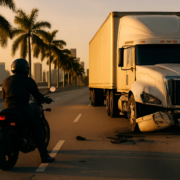
A loose box, piece of equipment, or other cargo can become a sudden roadway hazard for a motorcyclist. In a Miami motorcycle accident involving falling cargo from a truck, the truck may leave the scene without ever touching the bike, making careful evidence preservation especially important. Joseph Madalon can help riders understand how investigators may examine the driver’s actions, cargo securement, and the carrier’s practices. This guide explains who may bear responsibility, what riders and witnesses can record safely, and why prompt reporting can matter. Responsibility is fact-specific: cargo ownership alone does not establish fault, and more than one party may be involved. The details preserved at the scene can help clarify how the cargo came loose and connect it to the crash.
Who may be responsible when truck cargo hits a motorcycle in Miami?
Responsibility depends on how the cargo became a hazard, who handled it, and whether someone’s conduct contributed to the crash. Potentially responsible parties may include the truck driver, the motor carrier, a company or person that loaded or secured the cargo, or another business involved in preparing the load. These are possibilities to investigate, not assumptions that any particular party was at fault.
The driver and carrier
A driver’s actions before and during a trip may be relevant, including whether the driver knew or reasonably should have recognized a dangerous load. A carrier’s hiring, training, inspection, and cargo-handling practices may also matter, depending on the facts and the carrier’s role. A separate loader or shipper may be relevant if its work contributed to an unstable or inadequately secured load.
Investigators may compare accounts, photographs, vehicle information, and available records. An insurer may dispute how the cargo came loose or whether the rider’s actions contributed to the crash. Understanding the potential roles of each party is part of building a Miami motorcycle truck accident claim, particularly when several companies or insurance policies may be involved.
What evidence should riders and witnesses preserve?
A useful record can help identify the truck and document how the debris relates to the motorcycle’s path and damage. Safety comes first: nobody should enter traffic or approach an unsafe vehicle to gather evidence. If it is safe, riders and witnesses may consider recording:
- Wide and close-up photographs of debris, its position in the roadway, and visible motorcycle damage.
- The truck’s company name or markings, vehicle type, color, direction of travel, and any part of its plate that can be observed safely.
- The time, location, travel direction, weather, and nearby landmarks or intersections.
- Names and contact details for witnesses, along with a brief note of what each person saw.
- Nearby businesses or vehicles that may have cameras, without assuming footage will be retained automatically.
Do not move debris or alter the scene just to improve a photograph. A truck accident evidence checklist can help explain other categories of proof. In Miami, reporting and investigation may involve local law enforcement or the Florida Highway Patrol, depending on where the crash occurred and the circumstances. A report creates a record, but it may not answer every question about how cargo was secured.
How can riders protect evidence and address a missing truck?
A prompt, accurate report can help investigators understand the event while memories are fresh. Depending on the situation, a rider or witness may report the crash to the appropriate law enforcement agency, provide any truck details they observed, and identify nearby cameras or other witnesses. In Miami-Dade County, the agency with jurisdiction can depend on the roadway and incident; do not assume one department handles every location.
Keep original photos and videos when possible, and note who took them and when. Preserve any available clothing or damaged equipment without making unnecessary changes, and keep copies of communications related to the incident. A lawyer may evaluate whether additional records—such as carrier, loading, inspection, or camera materials—could be relevant and whether they can be requested or preserved.
If the rider swerved or fell to avoid cargo and the truck never touched the motorcycle, that fact alone does not resolve responsibility. The rider’s account, debris location, damage, and witness observations may help connect the hazard to the crash. For more on proving fault in a Miami motorcycle crash without vehicle contact, see the related guide. If the truck left before it could be identified, prompt reporting and any partial plate or company details may be useful; this resource discusses reporting a Miami motorcycle hit-and-run and preserving evidence.
Frequently Asked Questions
Can more than one party share responsibility for cargo that falls from a truck?
Possibly. Depending on the evidence, a driver, motor carrier, cargo loader, shipper, or another party may have played a role. Their responsibilities are not interchangeable, and merely owning the cargo or vehicle does not automatically prove fault. The facts about who loaded, checked, transported, or maintained the load may help identify which parties and insurance policies warrant further evaluation.
What if I could not safely stop to photograph the debris?
Personal safety matters more than taking a picture. A rider or witness may still be able to preserve useful details from memory, such as the location, time, truck appearance, direction of travel, and where the debris was seen. Witness contact information, a prompt report, and possible nearby camera footage may also help. The absence of scene photos does not by itself establish whether a claim can be evaluated.
Can a witness help if they did not see the cargo fall?
Yes. A witness may have observed the truck shortly before the crash, seen debris in the roadway, heard what happened, or noticed the rider’s evasive movement. Their account may help establish timing and location even if they did not see the cargo leave the truck. Investigators or attorneys may assess how directly the observation relates to the event and compare it with other evidence.
Does a police report decide who is legally responsible?
A report can document information gathered by responding officers, but it is not necessarily a final decision about civil liability. It may contain accounts, observations, and identifying details, and it can be considered alongside photographs, witness statements, vehicle or carrier records, and other evidence. In Miami, the report’s role and available follow-up can depend on the agency and facts involved.
How Joseph Madalon Can Help
A cargo-related motorcycle crash can raise overlapping questions about the driver, carrier, cargo handling, and evidence that may not remain available for long. Joseph Madalon is dedicated to helping injured riders understand the issues that may affect a claim and is committed to fighting for their rights. The firm can review available information, consider potential responsible parties, and explain options based on the circumstances. If you were hurt in a Miami crash involving cargo from a truck, contact Joseph Madalon for a free consultation or case evaluation. A conversation can help you understand what information may be relevant and what questions to consider next.
The information in this article is for educational purposes only and does not constitute legal advice. Contact a qualified attorney licensed to practice in Florida for advice specific to your situation.






Leave a Reply
Want to join the discussion?Feel free to contribute!