
What to Do After a Car Accident in Florida
The seconds after a crash can feel unreal. Your hands may shake, your heart may pound, and even simple choices can suddenly feel hard. If you are trying to figure out what to do after a car accident in Florida, the most important thing to know is this: the steps you take right away can protect both your health and your right to recover compensation.
Florida crashes often leave people dealing with more than vehicle damage. There may be pain that does not fully show up until hours later, pressure from insurance adjusters, missed work, and real fear about what comes next. That is why a calm, practical plan matters.
What to do after a car accident in Florida right away
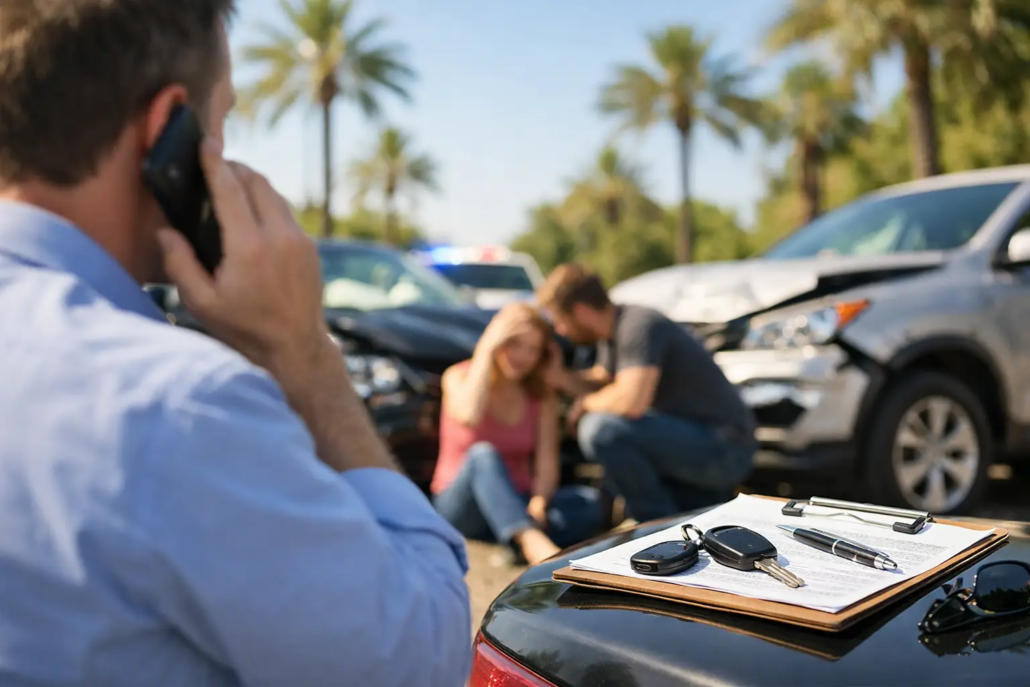
Start with safety. If you can move and your car can be moved safely, get out of traffic and into a safer location. Turn on your hazard lights. If anyone appears injured, call 911 immediately. Even if injuries seem minor, bringing law enforcement and emergency responders to the scene creates an official record that may become important later.
Do not assume you are fine just because adrenaline is masking the pain. Neck injuries, back injuries, concussions, and internal injuries can take time to show symptoms. Accept medical help if it is offered.
Once you are safe, exchange information with the other driver. Get names, contact details, driver’s license numbers, license plate numbers, and insurance information. Stay calm and keep the conversation short. This is not the time to argue about fault.
If you are physically able, document the scene. Take photos of the vehicles, visible injuries, road conditions, traffic signs, skid marks, debris, and the surrounding area. If there are witnesses, ask for their names and phone numbers. Small details disappear quickly after a crash, and they can matter when insurance companies start asking questions.
Call the police and get medical care
In Florida, calling law enforcement after a collision is often one of the smartest things you can do. A police report can help establish when and where the accident happened, who was involved, and whether any citations were issued. Insurance companies may try to minimize what happened when there is no report to anchor the facts.
Medical care is just as important. Florida’s no-fault system generally requires you to seek treatment within 14 days to access Personal Injury Protection, or PIP, benefits. Waiting too long can create a problem for your claim, even if your pain is very real.
Go to the ER, an urgent care center, your primary doctor, or another qualified medical provider as soon as possible. Be honest about every symptom, even if it feels small. A headache, soreness, numbness, dizziness, or shoulder stiffness may seem manageable in the moment, but those complaints can point to more serious injuries.
What not to do after a Florida car accident
A lot of people accidentally weaken their case in the first 24 hours. They apologize at the scene, tell the insurer they are not hurt, or put details on social media before they know the full extent of the damage. These mistakes are common, and insurance companies know how to use them.
Do not admit fault. Florida accident investigations are not settled by a quick roadside conversation. You may think you know what happened, but there may be traffic camera footage, witness accounts, vehicle data, or road conditions that tell a more complete story.
Do not give a recorded statement to the other driver’s insurance company without understanding the risk. Adjusters are trained to protect the company’s bottom line, not your recovery. A seemingly harmless comment like “I’m okay” can later be used to question your injuries.
And do not post photos or updates about the accident online. Even innocent posts can be twisted to make it look like you were not badly hurt or that your version of events is inconsistent.
Understanding Florida insurance after a crash
Florida is a no-fault state, which means your own PIP coverage typically pays for part of your medical expenses and lost wages after an accident, no matter who caused it. That surprises many people. They expect the at-fault driver’s insurer to take over immediately.
But PIP has limits, and serious injuries often go far beyond what it covers. If your injuries meet Florida’s legal threshold for seriousness, you may be able to pursue a claim against the at-fault driver for damages such as pain and suffering, additional medical costs, and future losses.
This is where things can get complicated. Not every crash leads to the same type of case. A relatively minor rear-end collision with short-term soreness may stay within the PIP system. A crash involving surgery, permanent impairment, significant scarring, or long-term disability may open the door to a much larger claim. It depends on the facts, the injuries, and the available insurance.
Report the accident carefully
You should notify your insurance company promptly, but be measured. Stick to the basic facts. State when and where the accident happened, who was involved, and that you are seeking medical evaluation. If you do not yet know the full extent of your injuries, say so.
Keep copies of everything. Save the claim number, adjuster contact information, repair estimates, medical records, bills, prescriptions, and receipts for any out-of-pocket expenses. If your injuries force you to miss work, keep documentation of lost income too. The paper trail matters because compensation is not built on guesswork. It is built on proof.
Why evidence matters so much
After a car accident, evidence has a short shelf life. Skid marks fade. Cars get repaired or totaled. Witnesses stop answering unknown numbers. Surveillance footage may be deleted. The sooner evidence is preserved, the stronger your position usually is.
That does not mean every person needs to become an investigator while injured. It means you should recognize that delay helps the insurance company more than it helps you. If liability is disputed, or if your injuries are serious, early legal guidance can make a major difference.
An attorney can help secure crash reports, witness statements, photos, black box data, medical records, and other evidence before key details disappear. Just as important, legal counsel can protect you from lowball settlement tactics that often show up before a victim understands the true value of the case.
When to speak with a lawyer
Not every fender bender requires legal action. But if you were injured, if fault is being disputed, if multiple vehicles were involved, if an uninsured driver caused the crash, or if the insurer is delaying or minimizing your claim, it is wise to speak with a lawyer as soon as possible.
This is especially true when the injuries are serious. Once you accept a settlement, you usually cannot go back and ask for more money later if your condition worsens. That is a painful lesson for many families. Fast money can be tempting when bills are piling up, but a rushed settlement may leave you carrying costs that should have been paid by the people responsible.
A strong legal team does more than file paperwork. It stands between you and the pressure. It helps value the case honestly, pushes back when insurers try to shift blame, and fights for compensation that reflects what this crash has actually taken from you.
What to do after a car accident in Florida if you feel fine
This is one of the most dangerous situations because people often walk away, go home, and assume the worst is over. Then they wake up the next morning barely able to move. Delayed symptoms are common after collisions.
If you feel okay, still get checked out. Follow up with a doctor. Watch for headaches, neck pain, back pain, nausea, dizziness, numbness, confusion, and trouble sleeping. Keep a simple journal of your symptoms and how they affect your daily life. That record can help show how the injury unfolded over time.
If the accident happened in Miami or anywhere else in Florida, the basic rule stays the same: protect your body first, then protect your claim. Those two goals go together.
Protect your recovery, not just your case
After a wreck, people often focus on the car because it is the visible damage. But your health, your income, your family routines, and your peace of mind are what really get hit. That is why the right next step is not just about insurance forms. It is about making sure you are not left alone to absorb the cost of someone else’s negligence.
At a time when everything feels unsettled, a clear plan can restore some control. Get safe. Get medical care. Document what happened. Be careful with insurers. And if the accident left you hurt or overwhelmed, get legal help before the system takes advantage of your vulnerability.
You do not have to have every answer today. You just need to make the next right move, and that one decision can change the course of your recovery.